Wednesday, 10 June 2026

Himalayan Diary-aah!


Twenty years ago, Teesta was a sight to behold. Unbridled, roaring, raw energy. As I make my way up the banks of Teesta, past Sevoke, Kalijhora, Durbindhara, I am dismayed. Today’s Teesta lies like a tranquilized tigress in a rangebound cage. She is being utilized for her hydro potential, for the benefit of mankind. River rafting still occurs along Teesta, but on a surface that is bereft of roughs and rapids, more akin to a paddle boat ride on a tranquil lake. Teesta is placid and tired, having given up her fight.

Confluence of Teesta and Rangit

********

The hamlet of Kashone (pop. 2,449 distributed between 500 odd families), at an elevation of 4,000 ft., lies near the border of Bengal and Sikkim. Time stands still here. The only sounds you hear emanate from birds and crickets. For a city-based soul, it takes time to adjust the ears to the surrounding sound. The sound of silence. My hideout is the solitary homestay at Kashone, run by Mangal Bhutia, of a non-descript age and genial disposition. He’s the sole operator in this five-room outfit, a local version of Reginald Jeeves.

********

Terraced organic cultivation is prevalent here. An abundance of millepedes contributes to the preservation of soil fertility. The produce from the fields, when presented on the table, brings a smile of contentment. Mangal is a superb self-taught chef, passionate about his craft. He does not rely on YouTube videos for inspiration. He operates on his gut feel, mix-and-match approach to concoct delectable fare. On my first evening, he dished out a wicked chicken curry. Breakfast the next morning was a ramen dish that left me scrambling for multiple helpings.

********

I remember lines from a poem in our school curriculum.

`What is this life if, full of care,
We have no time to stand and stare?

No time to stand beneath the boughs,
And stare as long as sheep and cows
’.

Google validates that William Henry Davies, a Welsh poet who spent a large part of his life as a tramp or a hobo, wrote these lines. He titled it `Leisure’. I am a relentless practitioner of this pursuit since I bade goodbye to a nine to five routine.

I stare out at a tall hill across the Rangpo river valley. The green draped hill is marred by a tanned white, winding gash that cuts its way up the hill. That’s the road built to carry people to Pakyong airport. The airport, Sikkim’s first, was built at a cost of INR 600 crores plus. The project was hailed as a technical triumph of reinforced soil structure engineering. Our Prime Minister inaugurated this airport for commercial flights in 2018 with fanfare and photo-op. By 2024, Pakyong airport was declared closed. The primary reason attributed for the closure was the challenge of weather conditions and visibility issues for take-off and landing, a fact that was known ab initio to the powers that be. `Development’ can be tricky!

********

Evening arrives. Clouds had been gathering since afternoon. The skies burst open in fury. `Torrential’ would be the word for it, I suppose. Amidst strong wind gusts, an unstable power distribution grid ensures complete darkness. The evening is thus a sonic presentation; sitting in pitch darkness in my balcony to hear the rain fall on the tinned roof. `Listen to the falling rain, listen to it fall…..’.  (Jose Feliciano).

The skies clear by the break of dawn. Puffs of innocent clouds float across the valley. Resplendent, dazzling green wherever your eyes go, in shades that a palette cannot hold.


********

This zone is home to a varied avian population. It would also be a lepidopterist’s delight. There is a misconception that butterflies were originally called `flutterbies’ which, though logical, has no basis. Why split hairs over such trivialities when you are better off marvelling at the riot of colours that these little creatures bring?  

Verditor Flycatcher

Red-billed Leiothrix

Ring butterfly

Himalayan Bulbul

Dark-branded Bushbrown

Common five-ring

********

A meaningful bakery culture flourishes in the region. The fastest moving items off the shelves are not breads or cakes, but a whopping range of cookies. They come in myriad shapes, sizes and flavours. The business is dominated by Muslims. It may be an interesting study to understand how this industry evolved and spread in the Kalimpong / Darjeeling hills, and why cookies hold centrestage.

********

Mangal had to drive down to Kalimpong for work at the district civil court. I joined him on the drive. We passed Deolo on the way. This hilltop entered the Bengali's conscience in 2012 when a purported secret meeting occurred between our erstwhile Chief Minister and the promoters of two now-defunct Ponzi schemes. Word spread and tourists began flocking. Deolo transformed from a sleepy, secluded hilltop. An indiscriminate construction boom followed, resulting in the existence of at least 60 homestays here now.

********

The drive from Teesta Bazar to Dawaipani is an experience. The 6,500 ft climb begins with gravity-defying gradients and sharp hairpin bends. Once that is done, the carpeted tea bushes in the surrounding estates take over. We pass by familiar names for the discerning tea lover; Peshok, Lopchu, Takdah, Runglee Rungliot. There are also names like Tinchuley, Lamahatta, Lovers’ Meet View Point along the journey that occupy mind-space in this social media age. A 20 kms run that should have been completed in an hour ultimately consumes three, thanks to the traffic chaos caused by these Instagram stopovers. Setting aside the picture postcard landscape, the remaining environment is a replica of Kolkata’s Burra Bazar. Ugly, makeshift houses masquerading as homestays round every corner, temporary stalls offering momo, thukpa, chow mein and even dosa and phuchka. Eager, screaming batches of tourists being unloaded from diesel belching SUVs, beer-bellied gents in skin-fit tees, women adorned as Christmas trees and kids engaged in bickering when they find time to take eyes off their screens. At Tinchuley ladies line up for photo-shoots amidst tea bushes, dressed in `phiran’ (yes, `phiran’, which is Kashmiri), faux gold jewelry and wicker baskets on their backs to ape tea pluckers.


********

Gujarat is a `dry’ state. I am informed that parched souls drive to neighbouring Daman or to Mount Abu to quench their thirst. Bihar, too, is a `dry’ state. It is just a two-hour ride from Kishanganj (in Bihar) to the base of the north Bengal hills beyond Siliguri. That may explain why one in three vehicles you see in these hills bear a Bihar registration plate.  

********

The last evening at Dawaipani. The sky remains overcast, though without threat of imminent rain. Balmy 16 degree Celsius weather. From my sitout, I observe a bonfire party in progress in the lower reaches. Wild gyrations to the boombox output of `Budtameez Dil’. The alcohol flow helps up the tempo. Tourists come in all forms. Touche!


********

Thursday, 29 May 2025

Arunachal Diary


Green. The first thing that strikes me as I return to North-East India is the greenery that abounds. As you progress towards Upper Assam from Guwahati through tea gardens, the shades of greenery deepen. Today, we are on a 262 kms drive from Guwahati to Bhalukpong, a busy town at the border of Assam and Arunachal Pradesh. Crossing the 3 km length of Kolia Bhomora Setu over Brahmaputra near Tezpur, named after an 18th century Ahom General, is a high point of this drive. We are headed for a vacation at India’s `Land of the Rising Sun’, albeit in the western-most part of the state.

********
Liquor outlets of all sizes proliferate Arunachal Pradesh. Its not difficult to discern why. A 750 ml variant of Old Monk is offered at INR 280, exactly half of what you would expect to shell out in your city. The tiniest of outlets stock the most esoteric single malts from Scotland. For me, however, the attraction of these shops lies in the availability of local wine, which are produced at Dirang. They come in four fruit variants. Peach, kiwi, apple and persimmon. Each more enticing than the other. An upstream consequence of the wine industry in Arunachal is the increased acreage of such fruit cultivation in the hills. I am no oenophile. But I have not consumed as much wine in the rest of my life as I did on this trip. I am unable to fathom why these wines are not available elsewhere.


********

For travelers between Guwahati and Tawang, the quaint town of Dirang is a preferred stopover. This place has historical significance. This was where an Indian envoy officially received the Dalai Lama when he escaped from Tibet in 1959.

I shall avoid the touristy `things to do and places to visit’ stuff about Dirang. But there are some features that I need to highlight. The nearby areas of Mandala Top and Sangti Valley are major attractions for bird lovers. Sangti Valley is the winter nesting grounds for the endangered black-necked crane, that migrate from upper reaches during winters. The arrival of these cranes are considered auspicious among local Monpa community and Buddhists.

One `must visit’ site at Dirang should be Thupsung Dhargye Ling which, in Tibetan, means `Place of Flourishing of Buddha’s Speech’. This monastery cum learning centre was consecrated by the Dalai Lama in 2017 to further Tibetan and Buddhist studies. Perched atop a hillock within the town, it offers ethereal views of the surrounding valley and hills.


********

China has a Voldemort effect in these parts. For many years after the war of 1962, the roads in Arunachal were kept in disrepair. This was perhaps based on a thinking by the powers that be that if a repeat incursion by China occurred, their progress into India would be hampered by poor road conditions.

In recent times, New Delhi has done a volte-face. Consolidation of Indian defence forces in this region has necessitated upgrading of road infrastructure for their movements. Border Roads Organisation (BRO) continues their yeomen’s work for construction and upkeep of roads in challenging terrain. Their latest engineering marvel is the all-weather Sela Tunnel, inaugurated in 2024, that provides round-the-year connectivity between Guwahati and Tawang. It bypasses the treacherous Sela Pass at a height of 13,700 ft, prone to frequent landslides and snowfall. What interests me about BRO is their effort in putting up quirky signs at every other turn on the roads.


********

More on engineering marvel, from another time. About 24 kms before you hit Tawang lies the Chakzam Bridge. In Monpo language `chak' means iron and `zam' means bridge. In times gone by, this 700 year old iron bridge connected the present Mogto area with Tawang. Lama Chakzam Wangpo, a revered monk, built this iron suspension bridge. It faced and survived severe shelling from the Chinese army in 1962.    


                                                                           ********

For complex historical reasons, China maintains its claims to have control of the area around Tawang. They refer to this area as South Tibet and cite the historical ties between Tibetan Buddhist monasteries in Tawang and Lhasa as evidence, arguing that these cultural and religious connections justify their claim. The second largest monastery in the world, after Lhasa, is at Tawang. The Dalai Lama’s last visit to Tawang was in 2017. China throws hissy fits each time the Dalai Lama expresses his wish to return to Tawang.  


********

A separate permit from the Indian army, over and above an Inner Line Permit for Indians, is required to visit Chumi Gyatse (Holy Water) Falls. It is located near the Line of Actual Control (LAC) with China. It is a stunning spectacle of 108 waterfalls flowing down steep cliffs at an elevation of 11,500 ft, creating an image of a massive curtain of water. Local belief among Monpa Buddhists suggests that Chumi Gyatse was created by Guru Padmasambhava (who introduced Buddhism to the region thirteen centuries ago) when he hurled his rosary of 108 beads on the hills. There is huge faith among locals, as well as the Indian army personnel, about the curative / therapeutic properties of the water from the Falls. Given the sensitivity of the area, personnel of the Bihar Regiment who man the posts here ensure that mobiles and cameras are handed over in their custody before commencing the visit. Only one person in a visiting group is allowed access to a mobile phone to click photos at specified spots. You are also instructed to put your phone on `flight’ mode, lest the phone latches on to tower signals from China. I get into a conversation with a jawan from the regiment. He overheard me talking in Bengali. He is from Kharagpur. He wants to ensure that he remains conversant in his mother tongue, having been stationed here for two years. 


********

Our overnight stopover on the return drive was at an elevation of 7664 ft at Shergaon. Eaglenest Sanctuary is a two-hour drive from this village. If your key words search on your AI tool for a vacation include `tranquility, bird sounds, stunning 360 degree views of green hills, feet-up-in-the-air, nothingness’ etc., Shergaon may not appear as an option. But on all these parameters, I’d rank Shergaon at the top. Its a pity we could not extend our stay here. But as Arnold Schwarzenegger growled in The Terminator, `I’ll be back’. 


********

Saturday, 24 June 2023

Khmer Diary


The Thai flight from Suvarnabhumi to Phnom Penh lands five minutes ahead of ETA. I had opted for an eVisa for my visit, thus avoiding the long queue under `visa on arrival’. I timed myself from aircraft alighting, passing through immigration check, baggage collection and boarding a cab. Twenty one minutes. This is a good start!

******

Prima facie, there is little to suggest an Indian influence in these parts. Scratch the surface, and nuggets appear. The etymology of three places in Cambodia serve as examples.

Consider Angkor. It is a corruption of the Khmer word `Nkor’ which, in turn, is derived from the Sanskrit `Nagar’, i.e. City.

The Rolous Group of temples lies 13 kms off Siem Reap, and was the capital of the Khmer kingdom around the 9th – 10th centuries. The locals refer to this place as Harihara-alaya. Hari + Hara + Alaya; in other words, the abode of Vishnu and Shiva.  

On the south-west fringes of Phnom Penh lies Chaktomuk, a serene place to watch the sunset from a barge. It lies at the confluence of four rivers; Tonle Sap (2 branches), Bassac and Mekong. Chaktomuk is a corruption of the Sanskrit word `Chaturmukh’, i.e. four faces.

******

On the return bus ride from Siem Reap to Phnom Penh, I sat next to a man about my age. We got talking. He was a pisciculture expert, involved in several riverine fish breeding projects in the country. He talked about Tonle Sap, the country’s main river. It is the only river in the world that reverses direction in water flow every year, based on seasonality. With the onset of monsoon in June, the river flows upstream, away from the sea, and empties into Tonle Sap Lake (the largest freshwater lake in south-east Asia) for the next four to five months.   

Bend in Tonle Sap at Phnom Penh


******

My early memories of Phnom Penh were of a quaint, sleepy outpost emerging from the scars of Khmer Rouge. It was one of those rare capital cities with no public transport infrastructure; it still does not have one. Over the past decade, there has been an explosion in construction, and vehicles on clogged roads. All in the name of development, or as our Government is fond of reiterating……`Vikaas’.

Two, three and four wheelers jostle for limited road space…..politely. The usual global big guns in the motor vehicles world fight for market share for two and four wheelers. The tuktuk or three-wheeler segment, however, is an absolute duopoly……between Bajaj and TVS. My heart imperceptibly swells, ever so slightly.

******

More on the ongoing real estate boom at Phnom Penh. Skyscrapers, blocked views, reflecting glass buildings, sharp angles, blinding LED displays……the city skyline has acquired that numbing sameness prevalent in most other metros.

Siem Reap offers a welcome change. There is something about red-tiled slanted roofs, pagoda-esque, that’s easy on the eyes!

Phnom Penh skyline

Siem Reap skyline

******

I meet John at Lost Bar & Grill, located on the toney promenade of Sisowath Quay. Looks-wise, he appears as a slimmer version of Telly Savalas, and prefers being dressed in all black. He hails from Boston suburbs. He hasn’t been to the USA in thirty-five years after setting foot in these parts. John cut his teeth in the construction equipment hiring business in the Siem Reap area, graduated to a road building contractor before stepping off the gas to open this bar at Phnom Penh a couple of months ago. Lost Bar specializes in all forms of beer off the tap. Business is looking up. John is happy to let me play my own music from YouTube in an establishment devoid of other customers.

Across the counter a bespectacled, studious young lady caters to my thirst. Her name is Alli, and she’s from Siem Reap. She is 24. We start a conversation. Alli graduated in banking and finance from the Royal University of Cambodia and took up this 3 PM to 11 PM job. The pay is decent, and she gets to have spare hours in the mornings. She shares a small apartment at Phnom Penh with her brother, who works at a real estate firm.

“With your academic background, you could have landed a job at one of several local or international banks,” I say.

“I do not want one. I receive feedback from my batchmates about the high levels of stress at banks. And such a job does not align with my objective,” she responds.

“So what is your objective?”

“I utilize my free time in the mornings to prepare for my masters at the university, which I will attend next year.”

“And what thereafter?”

“I will take up a teacher’s job at a high school or college at Siem Reap, and be with my community.”

Perspective! Experienced `Swades’ first hand.

******

Surviving the hot, humid and sticky weather is a challenge. Cambodia has a sensible solution to beat the tropical heat. It is called beer.

Beer encompasses your daily life. A large proportion of hoardings advertise all brands and forms. Beer is available off the shelf at daily needs stores and mom-and-pop shops; at prices that compare favourably with mineral water.

Some of the brands are well established. There is the eponymous `Cambodia’. `Angkor’ is not far behind, with its word-played `Anchor’ offering meaningful challenge.

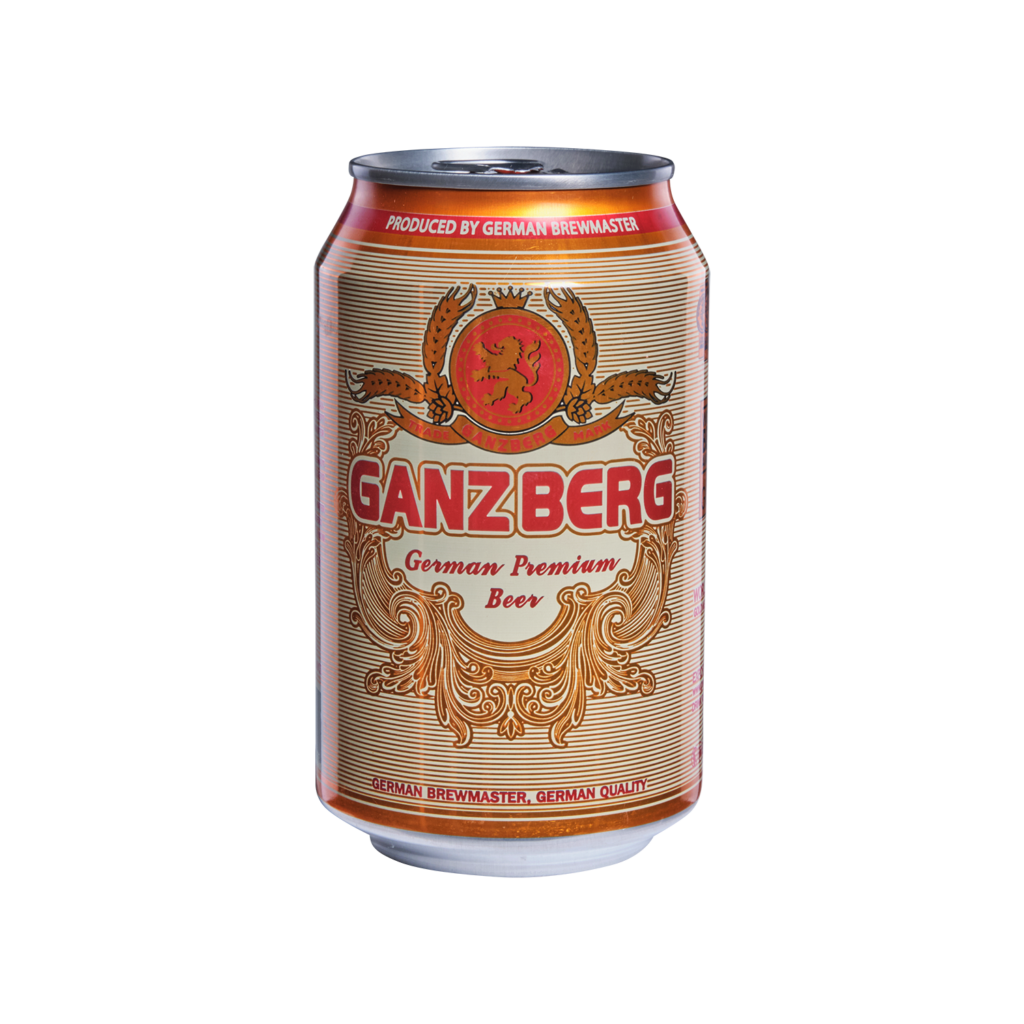
The new kids on the block are more interesting. `Ganzberg’ bears no relation with the Beat Generation icon. Its name is derived from a combination of G for German (because it is advertised as beer made with premium German technology) and perhaps from the promoters’ fascination for Carlsberg.

I see dark clouds of a diplomatic stand-off brewing between Cambodia and India. The current rage in Cambodian beer-dom is a robust, full-bodied stout (Alc. 5.3% Vol). It is only a matter of time before the bhakts get wind of this offering. It is called Hanuman.


******

I can confirm, with much happiness, that the industry in fakes and replicas thrives like never before. This straddles the world of iconic brands in fashion and allied accessories. For the discerning visitor, it is vital to distinguish between a fake and a replica. A fake usually involves a shoddy rip-off, often with a re-arrangement of letters in the name. The end-product often also lacks finesse. A replica, ah monsieur, has the touch of an artiste! Pictures speak louder than words. Check out the catalogue samples below.

Replica

Fake

Fake

Fake

Replica

Replica


******

Officially, it is called the Kingdom of Cambodia. The day after I reached Siem Reap, the country celebrated the Queen Mother’s birthday with much joy. But as Lennon / McCartney wrote, “Her Majesty is a pretty nice girl, but she doesn’t have much to say.” Cambodia matches UK as a constitutional monarchy. Although it is described as a multi-party democracy, ruling power has rested since 1985 with Hun Sen (a Khmer Rouge defector) and his Cambodian Peoples Party. Hun Sen’s outlook may be paraphrased in that quote of Henry Ford about Model T…..`people can vote for anyone, as long as it is the Cambodian Peoples Party’.

******

People in the Khmer kingdom originally adopted Hinduism. Towards the end of the 12th century, the majority converted to Buddhism, led by the royal family. The intricate reliefs sculpted in the western gallery of Angkor Wat depict scenes from the Indian epics. Ramayana permeates sections of Cambodian society even today. Inexplicably, the Mahabharata is virtually unknown in modern Cambodia. The walls of the southern section of the western gallery are dedicated to the battle of Kurukshetra. A large contingent of middle-aged Americans arrive to view this section. Here is a rough transcript of what their tour guide had to relate about this section, which I overheard.

“What you see are scenes from the final Battle of Kurukshetra, as described in Mahabharata. ‘Maha’ means `great’ and `Bharat’ means `war’. This was a war between two brothers; one good and the other evil. The good brother ultimately beat the evil one, primarily because he had the blessings and guidance of Krishna. Krishna is another name for Lord Vishnu, to whom Angkor Wat is dedicated.”

Go figure!

Bhishma on his bed of arrows

Karan - Arjun letting it rip


******

All visitors to these parts have their favourite Angkor temples. Mine lies beyond the Angkor Archaeological Park, 25 kms north-east of Siem Reap. Banteay Srei is a 10th century Shiva temple, pre-dating Angkor Wat by a couple of centuries. It is a miniature marvel of intricate carvings in red sandstone. In Khmer, `Banteay Srei’ means `the city of women’. But this is a contemporary name derived from a phonetic pronunciation of `Banteay Sri’, the `auspicious city’. Inscriptions excavated at the site gives its original Sanskrit name as `Ishwarapura’, the `city of God’. The four `dwarpalas’ (guardians) in the inner sanctum are intriguing. Their faces are a mixture of Garuda (the bird) and a monkey.


******

Do not miss out on a show of Phare Circus when at Siem Reap. This is a remarkable project that originated at Battambang in 1994 with nine children from refugee camps in the aftermath of Khmer Rouge. A monk took them under his wings and taught them painting and art as therapy to overcome their trauma. This initiative metamorphosed to an art and public school, where free education is provided. A music and theatre school came up next. Finally, for kids who wanted more, the circus school emerged. Phare has produced 250+ shows around the world, including in far flung countries like France and Russia. In 2021, it entered the Guinness Book of World Records as the longest running single circus show, timed at 24 hours 10 minutes! But this is a list of achievements only. The Phare Circus show is a dizzying, jaw-dropping, synchronous amalgam of art, folklore, theatre, music and acrobatics. One for the ages.


******

Finally, I dedicate a section to Chea Nor, my friend, philosopher and tuktuk man at Angkor. Physically, Chea is a combination of four outsized football; a couple that pass off as legs, a small one that represents his head and the largest one that comprise the rest of his body. Chea is the ultimate gadget freak and multi-tasker. He contends that his tuktuk is air-conditioned. What that means is that there is a blower in the shape of an AC vent that is directed at the passenger section. He has installed a mini refrigerator in the boot. After each halt in oppressive weather, he offers a bottle of chilled water and cold towels …. with a smile. Three smartphones are installed on mobile stands in front of his steering wheel. One is dedicated to WhatsApp and a second one to Telegram. He maintains a constant two-way communication via recorded messages on these two apps, ostensibly with his fellow tuktuk brethren and commission agents. On the third phone, he is on facetime, in animated dialogue with a woman who I assume is his wife. All these activities occur simultaneously, as he keeps watch on the road whilst driving. At each halt, he unpacks a portable hammock from the boot, hangs it from the branches of two trees, goes horizontal and renews his arguments with his wife.

Life’s good!

Note the smartphones!

Tuktuk with an AC!


******